The 10 Best Reverb Pedals of 2026
Our guide to the Best reverb pedals for November 2026 compares 10 top pedals from BOSS, Jim Dunlop, TC Electronic and more. Find the perfect reverb for your sound.
 By Tyler Brooks
Updated November 19, 2026
Finding the right reverb pedal can be a frustrating quest. You might struggle with pedals that sound thin or artificial, lack the specific ambient textures you crave, or have controls so complex they stifle creativity instead of inspiring it. When choosing, focus on the quality and variety of the reverb algorithms, the flexibility and intuitiveness of the controls, and whether the pedal fits your specific playing style and signal chain.
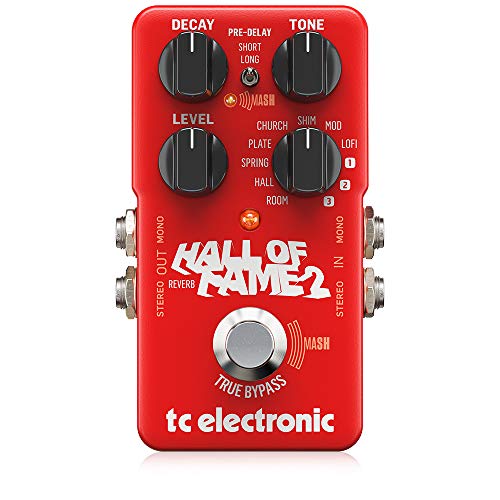
After comparing the top options for November 2026, we recommend the TC Electronic Hall of Fame 2 Reverb Pedal as the best all-around choice for most guitarists due to its incredible versatility and user-friendly TonePrint technology. For players dedicated to crafting vast, ethereal soundscapes, the Strymon Cloudburst Ambient Reverb Pedal is a specialized powerhouse. Discover more essential gear in our guide to the 10 Best Reverb Pedals of 2026.
The 3 Best Reverb Pedals on Our Shortlist (November 2026)
- Best for: Versatile players needing studio-quality tones
- Modes: 11+ via TonePrint
- Footswitch: MASH technology
- Bypass: True bypass & analog dry-through

- Best for: Creating expansive, cinematic ambient textures
- Algorithm: Stereo ambient reverb
- Modulation: Dedicated mod controls
- Special Features: Ensemble switch

- Best for: Budget-conscious explorers of unique reverb textures
- Modes: 9 distinct algorithms
- Modulation: Dedicated MOD control
- Feature: Trail function
This post may contain affiliate links. As an Amazon Associate we earn from qualifying purchases.
Quick Comparison
| Award | Product | TDB Score About LAT ScoreThe TDB Score is our own rating from 0 to 10, based on performance, design and build, ease of use, and value. It reflects independent research and is never influenced by manufacturers, retailers, or affiliate commissions. How we score | Price | |
|---|---|---|---|---|
| Best Overall |
TC Electronic Hall of Fame 2 Stereo Reverb Pedal
|
9.2/10 | $129.00 | Buy |
| Best Premium |
Strymon Cloudburst Ambient Reverb Pedal
|
9.2/10 | $279.00 | Buy |
| Best Budget |
JOYO Atmosphere R-14 9-Mode Reverb Pedal
|
8.9/10 | $79.99 | Buy |
| Top Rated |
 JHS Pedals 3 Series Reverb Pedal |
8.8/10 | $74.25 | Buy |
| Best Value |
 Electro-Harmonix Oceans 11 Reverb Pedal |
8.8/10 | $176.00 | Buy |
| Also Great |
 Walrus Audio Slö Multi-Texture Reverb Pedal |
8.8/10 | $219.99 | Buy |
| Also Great |
 Donner Verb Square 7 Modes Reverb Pedal |
8.4/10 | $44.99 | Buy |
| Also Great |
 Dunlop MXR M300 Reverb Pedal |
8.1/10 | $235.99 | Buy |
| Also Great |
 Walrus Audio Fundamental Series Reverb, 3 Modes |
7.8/10 | $99.99 | Buy |
| Also Great |
 BOSS RV-6 Digital Reverb Pedal |
7.8/10 | $142.99 | Buy |
TC Electronic Hall of Fame 2 Stereo Reverb Pedal
Based on the listed features, this stereo reverb pedal pairs a MASH footswitch with shimmer and TonePrint presets for guitarists who want expressive control and custom reverb colors. The analog dry path and true bypass support clear signal paths, while stereo inputs and outputs add setup flexibility.
Pros
- MASH footswitch allows expressive control.
- Shimmer effect adds ambient reverb textures.
- TonePrint access provides custom reverb presets.
- Stereo in and out supports flexible routing.
- True bypass and analog dry path preserve clean tone.
Cons
- Stereo in and out may require a two channel setup.
- The 5 by 3.5 by 3 inch size may be less suited to crowded pedalboards.
Strymon Cloudburst Ambient Reverb Pedal
This stereo reverb pedal is built for ambient soundscapes, featuring a dedicated Ensemble switch to layer in modulated textures. Its compact, robust enclosure houses controls for decay, modulation, pre-delay, tone, and mix, offering deep sonic sculpting.
Pros
- Stereo processing capability
- Dedicated Ensemble switch for modulated textures
- Comprehensive controls for decay, modulation, and tone
- Compact and durable physical design
Cons
- May have a premium price point due to brand and features
JOYO Atmosphere R-14 9-Mode Reverb Pedal
With nine reverb modes and four knobs, the JOYO Atmosphere R-14 gives guitarists a compact digital ambient option. Its Mod control and Trail toggle add movement and smoother decay, making it useful for players who want texture without menu navigation.
Pros
- Nine reverb modes cover Spring, Church, Plate, Shimmer, Reverse, and other textures.
- Four knobs and clear labels make tone shaping direct, without menu navigation.
- Modulation and Trail function add movement and smoother decay after bypass.
- Aluminum alloy chassis and compact size suit pedalboard use.
Cons
- Requires a 9V DC center negative adapter, which is sold separately.
- No battery compartment for backup power.
- May require a regulated isolated power supply to avoid noise or volume inconsistencies when daisy chaining with high current digital pedals.
JHS Pedals 3 Series Reverb Pedal
Made in Kansas City, this JHS reverb pedal spans small room sounds to long ambient washes, with EQ and pre-delay controls shaping brightness and entry. Guitarists who want one pedal for slap-like and spring-like tones as well as wide atmospheric textures may find it useful. It runs on 9V DC negative center power and draws 74mA.
Pros
- Made in Kansas City, USA
- Covers small room reverb to long ambient washes
- Tone EQ adjusts bright or dark texture
- Pre-delay knob supports slap-like and spring-like effects
Cons
- Requires 9V DC negative center power
- 74mA current draw may add to pedalboard power load
Electro-Harmonix Oceans 11 Reverb Pedal
This Electro-Harmonix pedal centers on reverb with 11 algorithms, a tails switch, and secondary knob mode for hidden parameters. It can create long or infinite reverb beds in most settings, and the included power supply reduces setup steps. It suits players who want expressive reverb control in a 4.5 by 2.75 by 2.1 inch enclosure.
Pros
- 11 reverb algorithms provide multiple reverb options
- Tails switch lets the reverb fade out naturally or stop immediately at bypass
- Secondary Knob Mode gives access to hidden parameters
- Infinite reverb is available in most settings for playing over sustained effects
- Power supply is included
Cons
- Infinite reverb is described for most settings, not every mode
Walrus Audio Slö Multi-Texture Reverb Pedal
Designed for ambient and cinematic soundscapes, this reverb pedal provides three distinct modes for creating deep, swelling, and modulated effects. Its unique 'Dream' mode includes a latching pad function, making it a specialized tool for experimental guitarists and synth players.
Pros
- Offers three unique reverb textures: Dark (octave-down), Rise (auto-swell), and Dream (modulated pad)
- Features a dedicated sustain switch for latching and controlling pad effects
- Compact pedalboard-friendly dimensions
Cons
- Lacks traditional spring or hall reverb algorithms, focusing on niche ambient textures
Donner Verb Square 7 Modes Reverb Pedal
This compact Donner pedal offers seven digital reverb modes, from room and hall to spring and mod, in an aluminum alloy enclosure. The true bypass circuit and mini footprint make it easy to fit on a pedalboard. It suits guitarists who want a simple reverb option without carrying a larger unit.
Pros
- Seven reverb modes cover room, hall, church, spring, plate, studio, and mod sounds.
- True bypass design helps keep the signal transparent when the effect is off.
- Aluminum alloy housing is durable and stable.
- Mini size helps fit onto crowded pedalboards.
- LED indicator shows working state.
Cons
- Power supply is not included.
- A separate DC 9V adapter is required.
Dunlop MXR M300 Reverb Pedal
This versatile reverb pedal packs six distinct, studio-quality reverb effects into a compact unit, making it a powerful tool for guitarists seeking to expand their sonic palette. Its 100% analog dry path and relay true bypass help preserve the integrity of your core tone.
Pros
- Offers six different high-quality reverb effects
- Features a 100% analog dry signal path
- Includes relay true bypass and delay trails modes
- Has a studio-grade low noise floor
Walrus Audio Fundamental Series Reverb, 3 Modes
Walrus Audio's Fundamental Series Reverb offers Hall, Spring, and Plate modes in a compact black unit. The Decay, Tone, and Mix controls keep shaping simple and direct. It suits players who want a focused reverb effect with a straightforward control set.
Pros
- Three reverb modes: Hall, Spring, and Plate
- Three dedicated controls for Decay, Tone, and Mix
- Compact dimensions at 5.55 x 4.5 x 2.9 inches
- Lightweight at about 0.66 pounds
Cons
- Black finish only
- Only three reverb modes
BOSS RV-6 Digital Reverb Pedal
A compact, studio-grade reverb pedal offering eight distinct modes, from classic to modern textures like Shimmer. Its simple controls make it easy to dial in rich, expansive sounds suitable for a wide range of playing styles.
Pros
- Compact and versatile design with eight diverse reverb modes
- Studio-grade sound quality powered by BOSS algorithms
- Simple and intuitive controls for quick tone shaping
- Expression pedal compatibility for dynamic performance control
- Supports both mono and stereo operation
How We Picked
To build this list of the top 10 reverb pedals for 2026, we focused on objective criteria that matter to players. We analyzed manufacturer specifications, user feedback trends, and the feature sets that define value and performance in this category. Our goal was to identify pedals that deliver on their promises, from pristine studio hall sounds to experimental modulated textures.
- Reverb Quality & Variety: The authenticity and range of the algorithms, from classic spring and plate to modern shimmer and ambient.
- Control & Usability: How intuitive the interface is for dialing in sounds, both on the fly and for saved presets.
- Build Quality & Reliability: Durability of the chassis and components for pedalboard life.
- Feature Set & Flexibility: The inclusion of special functions like trails, pre-delay, expression control, and stereo operation.
- Signal Integrity: The type of bypass (true or buffered) and its impact on your core guitar tone when the effect is off.
Buying Guide: Making Sense of Best Reverb Pedals
Understand the Core Reverb Types
Not all reverberation is created equal. Spring reverb mimics the classic “drip” of vintage guitar amps. Plate reverb offers a smooth, dense decay synonymous with studio recordings. Hall and Church algorithms simulate large acoustic spaces. Modern pedals often include experimental modes like Shimmer (which adds an octave-up effect) or modulated reverb. Decide which textures are essential for your music; a pedal like the JHS Pedals 3 Series Reverb excels at delivering a wide spectrum from subtle room sounds to huge washes.
Evaluate the Control Layout
A good reverb pedal should be both powerful and playable. Look for dedicated knobs for critical parameters like Mix (blend of wet/dry signal), Decay (length of the reverb tail), and Tone (brightness/darkness). Some pedals, like the Electro-Harmonix Oceans 11 Reverb Pedal, pack deeper editing into secondary functions, which is great for studio use but may be less immediate live. Consider your workflow: do you need simple, at-a-glance control or deep programmability?
Consider Your Signal Chain Needs
How a pedal integrates into your setup is crucial. True bypass pedals completely remove the circuit from your signal path when off, preserving your raw guitar tone. Buffered bypass can prevent high-end loss in long cable runs but may slightly color your sound. Stereo inputs and outputs are vital for expansive, immersive setups. Also, check the power requirements; digital reverbs often need more current (mA) than analog pedals. For insights on building a complete rig, explore our Musical Instruments category.
Quick Checklist
- Does it have the specific reverb type(s) you use most?
- Are the core controls (Mix, Decay, Tone) immediately accessible?
- Is the bypass type (true/buffered) suitable for your existing pedalboard?
- Does it have any must-have extra features (e.g., trails, expression input, stereo)?
- Does your power supply provide the correct voltage and sufficient current (mA)?
Related reading: For players also upgrading their core sound, see our review of the Best Reverb Pedals 2026.
FAQs
What is the best reverb pedals in 2026?
The “best” depends entirely on your needs. For most players seeking incredible versatility, the TC Electronic Hall of Fame 2 is a top contender due to its extensive TonePrint library. For dedicated ambient work, the Strymon Cloudburst is unparalleled.
Should I put my reverb pedal before or after my overdrive?
The traditional placement is in the effects loop of your amp or at the very end of your pedalboard chain. This allows the reverb to process your fully shaped guitar tone, creating a more natural, spacious sound. Placing it before drive pedals can create washed-out, chaotic textures, which can be desirable for experimental music.
What’s the difference between spring, plate, and hall reverb?
Spring reverb uses a physical spring to create a bright, lively, and sometimes “boingy” sound. Plate reverb uses a large metal sheet to produce a smooth, dense, and rich decay. Hall reverb digitally models the reflective sound of a large concert hall, offering a grand and immersive ambiance. The MXR® Reverb is renowned for its excellent emulations of all these classic types.
Do I need a pedal with a “trails” or “spillover” feature?
This feature allows the reverb decay to continue naturally after you switch the pedal off. It’s essential for seamless transitions between songs or sections where an abrupt cut-off would sound jarring. If you play live, it’s a highly valuable feature. Learn about other key features for live sound in our Audio section.
Are more expensive reverb pedals always better?
Not necessarily. Higher cost often buys more DSP power for complex algorithms, premium components, and rugged construction. However, many budget pedals offer exceptional value and great sounds. The JOYO Atmosphere, for example, provides nine unique modes at a very accessible price point. It’s about finding the pedal that has the specific features and sound you need.
Is a reverb pedal necessary if my amp already has reverb?
An amp’s built-in spring reverb is a classic sound, but it’s often limited to one type and one level of control. A dedicated pedal opens up a world of textures—hall, plate, shimmer, modulated—and gives you precise control over the mix and decay. It greatly expands your creative palette. For beginners building their first pedalboard, starting with a versatile multi-mode pedal is a smart move.
Final Thoughts
The ideal reverb pedal is the one that disappears into your signal chain until you need it, then delivers exactly the space and texture your music requires. For the versatile player who needs a reliable workhorse with endless customizability, the TC Electronic Hall of Fame 2 is a fantastic choice. If your goal is to paint with sound and create vast, emotive ambient pads, the specialized algorithms of the Strymon Cloudburst are purpose-built for you. And for the player on a budget who still wants to explore a wide range of unique and inspiring sounds, the JOYO Digital Reverb Pedal offers remarkable value and creativity. Whichever you choose, ensure it complements your existing gear and inspires you to play. For more inspiration on crafting your perfect setup, check out our guide to the 10 Best Reverb Pedals of 2026. Once your new pedal arrives, take time to explore all its modes at various settings—sometimes the most inspiring sounds are found in the subtle combinations.
About the author
Editor, Gaming. Tyler covers consoles, controllers, headsets and PC gaming gear. He compares performance, latency, build quality and compatibility, and notes when a feature is marketing rather than a real benefit.