Best Car Amplifiers 2026: Our Top 9 Picks
Looking to upgrade your car's sound? We analyzed 9 of the best car amplifiers for November 2026, from budget-friendly monoblocks to powerful multi-channel systems.
 By Jonah Weiss
Updated November 19, 2026
Upgrading your car audio often hits the same frustrating walls: your factory stereo sounds weak and distorted at high volume, adding aftermarket speakers doesn’t deliver the punch you expected, and getting deep, clean bass feels impossible without a dedicated power source. The core decisions for any car amplifier purchase boil down to matching its power output and channel configuration to your specific speakers and subwoofers, ensuring its physical size fits your vehicle’s available space, and verifying its compatibility with your existing head unit.

After comparing specs and features across the market, we recommend the SounDigital – Car Full Range Amplifier 800 as the best overall choice for most users due to its compact size and versatile 4-channel power. For those building a dedicated, high-power subwoofer setup, the Taramps HD 3000 1 Ohm 3000W RMS Full Range offers exceptional monoblock performance. For more audio gear insights, explore our related guides on musical instruments.
The 3 Best Car Amplifiers on Our Shortlist (November 2026)
- Best for: Compact, multi-speaker installations
- Channels: 4
- RMS Power: 800W
- Design: Class D

- Best for: Full-system audio upgrades
- Channels: 4
- RMS Power: 240W
- Design: Class A/B
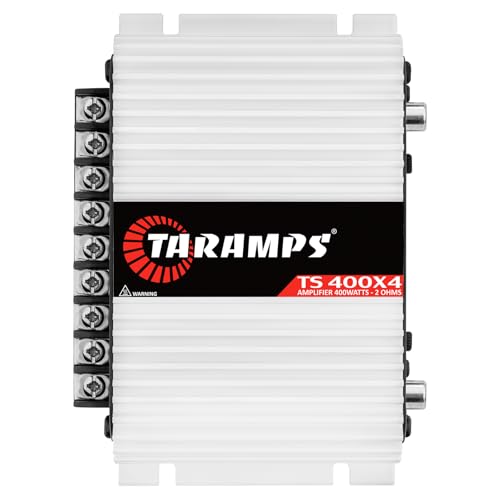
- Best for: Budget-friendly component systems
- Channels: 4
- RMS Power: 400W
- Design: Class D
This post may contain affiliate links. As an Amazon Associate we earn from qualifying purchases.
Quick Comparison
| Award | Product | TDB Score About LAT ScoreThe TDB Score is our own rating from 0 to 10, based on performance, design and build, ease of use, and value. It reflects independent research and is never influenced by manufacturers, retailers, or affiliate commissions. How we score | Price | |
|---|---|---|---|---|
| Best Overall |
SounDigital 800.4 EVO 4.0 4-Channel Amp
|
9.2/10 | $129.00 | Buy |
| Best Premium |
 Taramps HD 3000 3000W Monoblock Amp |
9.2/10 | $159.95 | Buy |
| Best Budget |
 Pioneer GM-A3702 2-Channel Car Amp |
8.9/10 | $85.00 | Buy |
| Top Rated |
 BOSS Audio R1100M Monoblock Car Amplifier |
8.8/10 | $79.99 | Buy |
| Also Great |
 CT Sounds CT-1000.1D Mono Amplifier |
8.8/10 | $159.99 | Buy |
| Also Great |
 Alpine S-A32F 55W 4 Channel Amp |
8.8/10 | $219.95 | Buy |
| Best Value |
 DS18 SXE-1200.4 4-Channel Car Amp |
8.3/10 | $139.46 | Buy |
| Also Great |
Pioneer GM-A6704 4-Channel Class AB Amp
|
8.3/10 | $140.00 | Buy |
| Also Great |
Taramps TS 400X4 White 2 Ohms 400W RMS 4-Channel
|
8.0/10 | $49.00 | Buy |
SounDigital 800.4 EVO 4.0 4-Channel Amp
For riders and compact-build owners, the SounDigital 800.4 EVO 4.0 emphasizes a small footprint, Class D efficiency, and moisture-resistant construction. Adjustable crossovers, gain controls, and bridgeable channels support flexible car, motorcycle, ATV, UTV, and marine audio setups.
Pros
- Compact size suits motorcycles, cars, and tight installations.
- Class D design supports efficient power use and lower heat.
- Conformal-coated components and aluminum chassis target vibration and moisture resistance.
- Built-in high-pass and low-pass filters, gain controls, and bridging support system tuning.
- Compatibility spans cars, bikes, ATVs, UTVs, and marine platforms.
Cons
- Total 800W across four channels may be limiting for very high-output subwoofer systems.
- Bridging channels for higher output reduces the number of independent channels available.
Taramps HD 3000 3000W Monoblock Amp
This Taramps monoblock is built for high-power full-range car audio, not just bass. Its 10Hz to 20kHz response, RCA input, and variable HPF, LPF, gain, and bass boost give flexible tuning for subwoofers, drivers, or tweeters. The HD 3000 suits builders who want one amplifier for broad frequency coverage and Monitor Level Remote control.
Pros
- 3000W RMS output
- Full-range 10Hz to 20kHz response
- Variable HPF, LPF, gain, and bass boost
- RCA input with Monitor Level Remote compatibility
- Operates at 1, 2, or 4 Ohms
Cons
- Needs 4 AWG power wiring and a 150A fuse, which may complicate installation
- Full-range flexibility may require careful speaker pairing
Pioneer GM-A3702 2-Channel Car Amp
Pioneer GM-A3702 is a bridgeable two channel car amplifier with automatic signal sensing and turn-on, plus built-in high pass and low pass filters. It delivers 60 watts RMS x2 at 2 ohms, or 190 watts RMS x1 in bridged mono, using a Class AB design aimed at efficiency and reduced crossover distortion. This model is for owners who want more clean power than a head unit can provide without adding a separate crossover.
Pros
- Bridgeable two channel layout supports 60 watts RMS x2 at 2 ohms, or 190 watts RMS x1 in mono.
- Class AB design balances efficiency with reduced crossover distortion.
- Automatic signal sensing and turn-on are included, along with built-in high pass and low pass filtering.
- Selectable low-pass filter provides an 80 Hz cutoff with a 12 dB per octave slope for bass control.
Cons
- The 500 watts max rating is a peak figure, while continuous output is 60 watts RMS x2 or 190 watts RMS x1 bridged.
- Bridged mono operation uses both channels, so it cannot power a stereo pair and a subwoofer at the same time.
- The low-pass filter uses an 80 Hz cutoff and 12 dB per octave slope, which limits more advanced crossover tuning.
BOSS Audio R1100M Monoblock Car Amplifier
This monoblock amplifier is designed for powering subwoofers, delivering up to 1100 watts max. Its feature set includes a remote subwoofer control and robust protection circuits, making it a candidate for users seeking an affordable high-power boost for their car audio system.
Pros
- High power output suitable for subwoofers
- Includes remote subwoofer control for convenience
- Multiple protection circuits (thermal, short, overload)
- Offers both RCA and speaker level inputs for flexibility
- Backed by a long 6-year warranty when purchased through Amazon
Cons
- Professional installation is strongly recommended, which adds to the total cost
- Lacks verified user reviews to corroborate long-term reliability
CT Sounds CT-1000.1D Mono Amplifier
This compact Class D monoblock amplifier delivers a substantial 1000 watts RMS at 1 ohm, making it a potent yet space-efficient choice for powering a subwoofer. Its proprietary cooling design and 4-way protection circuitry aim for reliable performance even during demanding use. It's engineered for users who want high power output without sacrificing too much trunk space.
Pros
- High power output (1000W RMS at 1 ohm) from a compact chassis.
- Designed with efficient heat dissipation for cooler operation.
- Includes comprehensive 4-way protection circuitry for safety.
- Comes with a bass knob for easy tone adjustment.
Cons
- Requires a robust 4-gauge power supply installation.
Alpine S-A32F 55W 4 Channel Amp
This Alpine Class D car amplifier is rated for four channels at 55 watts RMS into 4 ohms at 14.4V, and the specifications list 4/3/2 channel operation. The automotive form factor suits vehicle speaker upgrades, while the stated over 98 dB signal-to-noise ratio at rated power is a useful spec for system clarity.
Pros
- 4/3/2 channel power amplifier
- 55W RMS x 4 into 4 ohms at 14.4V
- Class D digital amplifier
- Signal-to-noise ratio greater than 98 dB at rated power
Cons
- The 11 x 11 x 5 inch dimensions may be bulky for tight vehicle installations
DS18 SXE-1200.4 4-Channel Car Amp
DS18 SXE-1200.4 is a 4-channel Class A/B car audio amplifier aimed at speaker upgrades and custom builds. Its variable crossover, adjustable gain, and multiple output modes give installers room to tune power to 2- or 4-ohm speaker sets. The listed 10 x 12 x 9 inch chassis is compact for a Class A/B design, though it still needs a planned mounting spot.
Pros
- Class A/B design uses a smaller transformer, helping it fit custom vehicle builds.
- Fully variable crossover and adjustable input gain support speaker tuning.
- Offers 60W x 4 at 4 ohms, 100W x 4 at 2 ohms, and 200W x 2 bridged at 4 ohms.
- 4-channel layout supports full-range speaker systems and bridged front/rear setups.
Cons
- Listed 10 x 12 x 9 inch dimensions may be bulky for tight spaces.
- Bridged output is limited to 200W x 2 at 4 ohms, which may constrain high-demand builds.
Pioneer GM-A6704 4-Channel Class AB Amp
A 4-channel Class AB amplifier from Pioneer, the GM-A6704 targets car audio owners who want to add power to speakers or bridge channels for a more focused setup. Its 60 watts RMS per channel at 4 ohms, 190 watts RMS x2 in bridged mode, and adjustable high-pass and low-pass filters give practical control over frequency delivery. The unit measures 8.5 by 14 by 2.375 inches and weighs 4.9 pounds, so mounting space should be checked before purchase.
Pros
- 60 watts RMS per channel at 4 ohms supports four car speakers with usable power.
- Bridgeable to 190 watts RMS x2, allowing a two-channel setup or extra output for selected speakers.
- Variable high-pass and low-pass filters help match frequency ranges to different speakers or a subwoofer.
- Class AB design is intended to balance efficiency and performance while reducing crossover distortion.
Cons
- Bridged mode uses two channels, so full four-channel speaker coverage is not available at the same time.
- 4.9 pounds and 14-inch length may require careful mounting clearance in tight vehicle spaces.
- The 1,000 watts maximum rating is not continuous output, so system design should rely on the RMS figures.
Taramps TS 400X4 White 2 Ohms 400W RMS 4-Channel
This four-channel car amplifier delivers 400W RMS, with 4 x 100W at 2 ohms or 2 x 200W bridged at 4 ohms. Fixed HPF and LPF crossovers, RCA inputs, and a compact white chassis suit installers tuning door, tweeter, midrange, or component speaker systems.
Pros
- 400W RMS output supports 4 x 100W at 2 ohms or 2 x 200W bridged at 4 ohms.
- Built-in fixed HPF and LPF crossovers provide precise sound tuning.
- Compact, lightweight design at 0.99 pounds supports easy installation.
- RCA inputs and short-circuit protection support dependable operation.
Cons
- Fixed HPF and LPF crossovers limit crossover tuning compared with adjustable designs.
- Bridged mode reduces channel count to 2 x 200W RMS at 4 ohms.
How We Picked
To build this list of the best car amplifiers, we conducted a comparative analysis based on objective specifications and key performance indicators. We focused on identifying models that deliver reliable power and flexibility for a range of audio builds. Our selection process prioritized the following criteria:
- Power Output & Channels: Matching RMS wattage and channel count (monoblock, 2-channel, 4-channel) to common speaker and subwoofer setups.
- Efficiency & Class Design: Evaluating the balance between power consumption, heat generation, and audio fidelity offered by Class A/B, D, and full-range designs.
- Installation & Size: Considering physical dimensions and wiring requirements for fitment in various vehicles.
- Control & Tuning Features: Assessing the availability of built-in crossovers (HPF/LPF), gain controls, and bass boost for sound customization.
- Build Quality & Protection: Looking for robust construction, thermal management, and protective circuitry for long-term reliability.
Buying Guide: Making Sense of Best Car Amplifiers
Understand Power & Channels
The amplifier’s channel configuration dictates what you can power. A monoblock (1-channel) like the CT Sounds CT-1000.1D Compact Class D Car Audio is dedicated to driving a subwoofer. A 2-channel amp can run a pair of speakers or be bridged for a single sub. A 4-channel amplifier is the most versatile, powering four speakers or a combination of speakers and a bridged sub. Always match the amplifier’s RMS power rating to the RMS handling of your speakers for clean, distortion-free sound.
Consider Amplifier Class & Efficiency
Amplifier class affects performance and electrical draw. Class A/B amps, like many from Pioneer, are known for warm, accurate sound but are less efficient and generate more heat. Class D amplifiers are highly efficient, run cooler, and are more compact, making them ideal for space-constrained installations and systems with high power demands. Your vehicle’s electrical system and available cooling space should guide this choice.
Check for Essential Features & Compatibility
Built-in crossovers (High-Pass and Low-Pass Filters) are crucial for directing the correct frequencies to your speakers and subwoofer, protecting them and improving sound quality. Ensure the amp has the correct input type (RCA or speaker-level) to connect to your car stereo. For a seamless integration into your broader home or car audio ecosystem, you might also be interested in our guide on the best home theater receivers.
Quick Checklist
- Have you matched the amp’s RMS power to your speakers’ RMS handling?
- Does the channel count (1, 2, 4) suit your speaker/subwoofer plan?
- Will the amplifier’s physical dimensions fit in your chosen installation spot?
- Does your car stereo provide the required RCA or speaker-level outputs?
- Have you budgeted for a wiring kit, which is almost always sold separately?
Related reading: For those building a complete audio setup, see our picks for the best musical instruments for beginners.
FAQs
What is the best car amplifiers in 2026?
The “best” depends entirely on your specific needs. For a balance of power, size, and versatility for most multi-speaker upgrades, the SounDigital 800.4 is an excellent starting point. Our Musical Instruments category features more gear for every level.
Do I need a separate amp for my subwoofer?
Subwoofers, especially those designed for deep bass, require significant power that most head units cannot provide. A dedicated monoblock or a bridged multi-channel amplifier, like the BOSS Audio Systems R1100M 1100 Watt Monoblock Car, is highly recommended to unlock their full potential and prevent distortion.
How difficult is it to install a car amplifier?
Installation involves running power cables from the battery, grounding the amp, connecting speaker wires, and tapping into the head unit’s signal. While a determined DIYer can manage it with guides, professional installation is often advised to ensure safety, avoid electrical issues, and achieve optimal sound quality.
What does “bridging” an amplifier mean?
Bridging combines two amplifier channels into one, effectively doubling the power output to a single speaker or subwoofer. This is a common technique when using a 4-channel amp to power three components: two speakers on two channels and a subwoofer on the bridged remaining two. Check your amp’s manual to confirm it supports bridging.
Will an amplifier drain my car battery?
A properly installed amplifier with an adequate wiring kit and correctly set gain should not drain your battery while the car is off, as it should be connected to a remote turn-on wire from the head unit. However, playing the system at high volume with the engine off can drain the battery quickly. For other power-related gear, our Audio section has more insights.
What size wiring kit do I need?
The required wire gauge depends on the amplifier’s total RMS power and the distance from the battery. Higher power demands thicker wire (lower AWG number, like 4-gauge) to minimize voltage drop and prevent overheating. Always refer to the amplifier manufacturer’s recommendation for the minimum wire gauge.
Final Thoughts
Selecting the right amplifier transforms your in-car audio from an afterthought into a highlight. For users needing a powerful yet compact solution for door speakers and tweeters, the SounDigital Car Full Range Amplifier 800 delivers versatile 4-channel power in a tiny footprint. If you’re planning a comprehensive upgrade for your entire car’s speaker system, the Pioneer GM-A6704 provides the robust 4-channel foundation and tuning controls needed for a balanced, high-fidelity soundstage. Finally, for enthusiasts on a tight budget looking to drive a component set, the Taramps TS 400X4 offers remarkable 4-channel performance at an accessible price point, proving you don’t have to spend a fortune for clear power. For more inspiration on crafting your perfect sound environment, check out our guide on the best Dolby Atmos soundbars. Once your new amp arrives, inspect all components, plan your wiring route before drilling, and always set the gain controls properly using a guide or multimeter to avoid damaging your new equipment.
About the author
Editor, Musical Instruments. Jonah covers guitars, keyboards, drums and recording gear for beginners and hobbyists. He compares build quality, playability, included accessories and the cost of upgrades.