Best Headphones For Music Production 2026: Top 10 Picks for November
Selecting the right headphones can define your music production quality in 2026. Our roundup evaluates professional models for critical listening, isolation, and long-term comfort.
 By Sam Rivera
Updated November 5, 2026
Finding headphones that deliver accurate, uncolored sound for critical listening can be a challenge. You might struggle with muddy bass that masks details, uncomfortable earcups that cut sessions short, or poor isolation that lets background noise ruin your focus. For music production, the key decisions come down to sound accuracy (flat vs. colored response), comfort for long hours, and isolation (closed-back) versus soundstage (open-back).

After comparing specs and thousands of user reviews, we found standout options for different needs. For most producers seeking a balanced, reliable tool, the Audio-Technica ATH-M50X Professional Studio is a top choice. If you need maximum isolation for recording vocals or working in noisy spaces, consider the beyerdynamic DT 770 Pro (80 Ohm). For more on audio gear, explore our Audio category.
The 3 Best Headphones For Music Production on Our Shortlist (November 2026)
- Best for: Critical mixing and tracking
- Driver: 45 mm
- Design: Circumaural closed-back
- Cable: Detachable

- Best for: Open-back audiophile listening
- Driver: Not specified
- Design: Open-back over-ear
- Cable: Detachable

- Best for: Budget-friendly DJ monitoring
- Driver: 50 mm
- Design: Swiveling over-ear
- Cable: Single-side entry
This post may contain affiliate links. As an Amazon Associate we earn from qualifying purchases.
Quick Comparison
| Award | Product | TDB Score About LAT ScoreThe TDB Score is our own rating from 0 to 10, based on performance, design and build, ease of use, and value. It reflects independent research and is never influenced by manufacturers, retailers, or affiliate commissions. How we score | Price | |
|---|---|---|---|---|
| Best Overall |
 Sony MDR7506 Professional Studio Headphones |
8.9/10 | $113.00 | Buy |
| Best Value |
Audio-Technica ATH-M50X Studio Headphones
|
8.9/10 | $159.00 | Buy |
| Best Budget |
 Audio-Technica ATH-M20x Professional Studio |
8.8/10 | $59.00 | Buy |
| Top Rated |
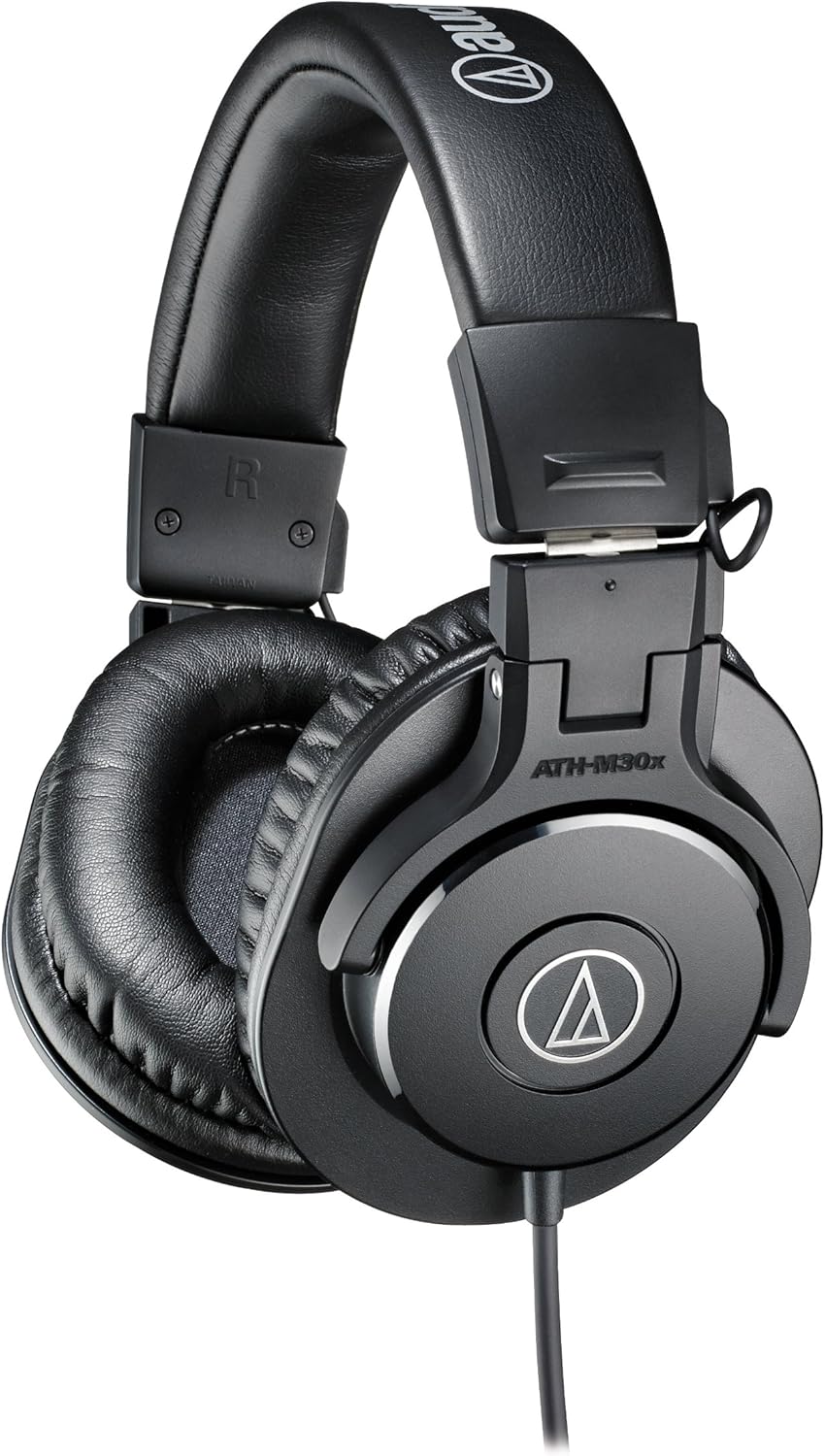 Audio-Technica ATH-M30x Professional Studio |
8.8/10 | $79.00 | Buy |
| Also Great |
 Audio-Technica ATH-M40x Professional Studio |
8.8/10 | $109.00 | Buy |
| Best Premium |
 Beyerdynamic DT 770 Pro 80 Ohm Studio Headphones |
8.8/10 | $159.99 | Buy |
| Also Great |
 beyerdynamic DT 990 Pro 250 Ohm Headphones |
8.8/10 | $199.99 | Buy |
| Also Great |
Sennheiser HD 599 Open-Back Audiophile Headphones
|
8.8/10 | $239.95 | Buy |
| Also Great |
 Sennheiser HD 280 Pro Closed-Back Studio |
8.6/10 | $89.99 | Buy |
| Most Popular |
OneOdio Pro-10 DJ Headphones with 50mm Drivers
|
8.4/10 | $31.99 | Buy |
Sony MDR7506 Professional Studio Headphones
A studio standard for decades, these wired, closed-back headphones deliver accurate and detailed sound reproduction favored by audio professionals. Their rugged, foldable design and included case make them a durable, portable choice for critical listening.
Pros
- Excellent sound accuracy and detail reproduction for professional monitoring.
- Rugged, foldable design with a protective soft case for portability.
- Comfortable closed-ear design provides effective passive noise isolation.
- Long, professional-grade 9.8-foot OFC cable with gold connectors for reliable signal.
Cons
- The long cable is not detachable, which can be cumbersome for casual use.
- Sound signature is very flat and analytical, which some may find lacking in bass for entertainment.
Audio-Technica ATH-M50X Studio Headphones
A professional studio monitor headphone known for its critically acclaimed sound quality and durable build. Its detachable cable and swiveling earcups add versatility for both studio work and personal listening.
Pros
- Critically acclaimed sonic performance with deep, accurate bass
- Professional-grade, durable construction with comfortable circumaural design
- Detachable cable and 90-degree swiveling earcups for convenience
- Excellent sound isolation suitable for loud environments
Cons
- Wired connectivity only, no wireless option
- Not water resistant
Audio-Technica ATH-M20x Professional Studio
These wired over-ear headphones are built for studio work, offering a balanced sound profile tuned for mixing and tracking. Their circumaural design and robust construction provide effective sound isolation and durability for long sessions.
Pros
- Excellent sound isolation from circumaural design
- Durable build quality suitable for professional use
- Comfortable suspension headband for extended wear
- Includes a 6.3mm adapter for studio equipment
- Long 9.8-foot cable for flexible setup
Cons
- Wired connectivity lacks Bluetooth convenience
- Not water resistant
Audio-Technica ATH-M30x Professional Studio
A professional-grade studio headphone favored by audio engineers for its accurate mid-range and sound isolation. Its collapsible design and robust build make it a versatile choice for both studio work and field recording.
Pros
- Excellent sound isolation from circumaural design
- Collapsible for enhanced portability
- Durable build quality with pro-grade materials
- Accurate mid-range definition for detailed audio
- Comes with a carrying pouch and screw-on adapter
Cons
- Not water resistant
- Uses passive noise cancellation only
Audio-Technica ATH-M40x Professional Studio
These professional-grade over-ear headphones are engineered for accurate audio monitoring. Their flat frequency response and robust build make them a reliable choice for studio work and DJing, offering excellent sound isolation and convenient one-ear monitoring.
Pros
- Flat, accurate sound signature ideal for critical listening and mixing
- Excellent build quality with durable, pro-grade materials
- Collapsible design and detachable cables enhance portability
- 90-degree swiveling earcups facilitate one-ear monitoring
Cons
- Sound isolation is passive, not active noise cancellation
- Not water resistant
Beyerdynamic DT 770 Pro 80 Ohm Studio Headphones
A closed back studio headphone built for monitoring and recording, with 80 ohm impedance that pairs best with an interface or amp. Replaceable velour pads and a spring steel headband support long sessions, while passive isolation helps keep click and mix bleed away from microphones.
Pros
- Closed back design gives passive isolation for vocal booths, podcast desks, and loud rooms
- 80 ohm impedance sounds best from an audio interface or headphone amp
- Replaceable velour ear pads and a spring steel headband support long daily sessions
- Fixed 3 m straight cable with 1/4 inch adapter suits studio desk setups
- Made in Germany
Cons
- Fixed cable limits portability and cannot be swapped
- Performs best with an interface or amp rather than a low powered source
- Passive isolation only, with no active noise cancellation
beyerdynamic DT 990 Pro 250 Ohm Headphones
This 250 ohm open-back studio headphone is made for audio interfaces and dedicated amplifiers, not casual phone listening. Its wide, natural stereo image and soft velour pads suit mixing, mastering, and long sessions. Customer ratings show a 4.6 average from 20,251 reviews.
Pros
- 250 ohm impedance is designed for audio interfaces and headphone amps
- Open-back design provides a wide, natural stereo image for mixing and mastering
- Soft, replaceable velour ear pads and a spring-steel headband are built for long-session comfort
- Made in Germany and backed by a 2-year warranty
- High customer rating, 4.6 from 20,251 reviews
Cons
- Needs a headphone amp or audio interface for full volume and is not ideal straight from a phone
- Open-back sound is audible to others and does not isolate noise
- Fixed 3m cable is not detachable, limiting cable flexibility
Sennheiser HD 599 Open-Back Audiophile Headphones
Our review finds these open-back wired headphones deliver a natural and spacious soundstage, praised for their detailed audio reproduction. Their lightweight build and plush ear pads make them a comfortable choice for extended listening sessions, whether for music, gaming, or mixing.
Pros
- Open-back design provides a natural and immersive soundstage
- Lightweight construction with velour ear pads ensures all-day comfort
- Detachable cables offer versatile connectivity options
- Compatible with a wide range of audio devices and phones
Cons
- Open design offers no noise isolation, allowing sound to leak both in and out
- Lacks water resistance
- Wired connection only, no true wireless capability
Sennheiser HD 280 Pro Closed-Back Studio
These professional-grade closed-back headphones are built for critical listening and studio monitoring, delivering accurate, linear sound with 32dB of passive noise isolation. Their rugged, modular construction features user-replaceable parts and collapsible ear cups for durability and portability. They offer wide compatibility, from studio gear to personal devices, making them a versatile tool for audio professionals.
Pros
- Excellent passive noise isolation (32dB attenuation) for focused listening.
- Rugged build with user-replaceable parts like the cable and earpads for longevity.
- Collapsible, rotating ear cups and a coiled cable for easy transport and flexible use.
- Accurate, linear sound reproduction suitable for critical monitoring applications.
- Wide compatibility with a 3.5mm jack and included 1/4" adapter for various devices.
Cons
- The closed-back, over-ear design with 6N contact pressure may feel tight or cause ear fatigue during very long sessions.
- The coiled cable, while flexible, may feel bulky or restrictive for some users compared to a straight cable.
- Primarily plastic and PU construction, while robust, may not feel as premium as some higher-end materials.
OneOdio Pro-10 DJ Headphones with 50mm Drivers
These wired over-ear headphones are built for studio monitoring and DJ use, featuring 90-degree swiveling cups for single-ear listening. They deliver a bass-forward sound profile with large drivers and are noted for their comfortable, adjustable fit during long sessions.
Pros
- Powerful bass and clear sound from 50mm neodymium drivers
- Comfortable, padded ear cushions and adjustable headband for extended wear
- 90-degree swivel cups enable convenient single-ear monitoring for DJs
- Broad compatibility with devices via dual 3.5mm and 6.35mm jacks
- Includes a detachable cable and a protective case
Cons
- Wired-only operation lacks wireless convenience
- Over-ear design may be bulky for some users
How We Picked
To compile this list of the best headphones for music production, we analyzed 10 leading models based on technical specifications, professional user feedback, and aggregated review data. Our goal was to identify products consistently praised for their performance in studio environments. We focused on objective factors that matter most for critical audio work.
- Sound Accuracy: Prioritized headphones known for a flat, neutral frequency response for honest mixing.
- Driver Size & Technology: Evaluated driver specifications (e.g., 40mm, 45mm, 50mm) and magnet types (neodymium) for clarity and power.
- Build & Comfort: Considered materials, weight, earpad type, and headband design for durability during long sessions.
- Isolation vs. Soundstage: Balanced the needs for closed-back isolation (for recording) against open-back soundstage (for mixing).
- Connectivity & Features: Looked at cable type (detachable/fixed), impedance, and included accessories.
Buying Guide: Making Sense of Best Headphones For Music Production
Closed-Back vs. Open-Back Design
Your choice between closed-back and open-back headphones defines your studio workflow. Closed-back models, like the Audio-Technica ATH-M30x Professional Studio, seal around your ears to prevent sound leakage. This is essential for recording vocals or instruments, as it keeps the headphone mix from bleeding into the microphone. It also blocks out external room noise, helping you focus.
Open-back headphones, on the other hand, have perforated earcups that allow air and sound to pass through. This creates a more natural, spacious stereo image—often described as a wider "soundstage"—which can be beneficial for critical mixing and mastering decisions, as it mimics listening to speakers in a room.
Impedance and Amplification
Impedance, measured in ohms (Ω), indicates how much power headphones need. Lower impedance models (like 32 or 80 ohms) are designed to work well directly from laptops, audio interfaces, or smartphones. Higher impedance headphones (250 ohms or more) typically require a dedicated headphone amplifier to reach their full potential in volume and dynamic range. Ensure your audio interface or mixer can drive your chosen headphones adequately.
Comfort for Marathon Sessions
Music production sessions can last hours. Look for headphones with ample padding on the headband and earcups. Circumaural (over-ear) designs that fully encircle the ear are generally more comfortable than on-ear models for extended wear. Breathable materials like velour, as found on many beyerdynamic models, can reduce heat buildup. Adjustability and a secure but not overly tight clamp force are key to avoiding fatigue.
Quick Checklist
- Sound Signature: Does it have a flat, neutral response suitable for mixing?
- Design Choice: Have I decided between closed-back (isolation) or open-back (soundstage)?
- Power Needs: Is the impedance compatible with my audio interface or do I need an amp?
- Fit Test: Are the earpads fully over-ear and is the headband adjustable for a secure, comfortable fit?
- Cable & Durability: Is the cable detachable for easy replacement, and does the build quality suggest longevity?
Related reading: For more on professional audio monitoring, see our guide on the Best Headphones For Music Production 2026.
FAQs
What is the best headphones for music production in 2026?
The "best" depends on your primary task. For all-around studio work including tracking and mixing, closed-back, neutral-sounding headphones like the Audio-Technica ATH-M50x are a industry standard. For a more detailed breakdown, check our Headphones category page.
Do I need a headphone amplifier for studio headphones?
It depends on the headphone’s impedance. Models with higher impedance (e.g., 250 ohms) will benefit from a dedicated amp to achieve proper volume and dynamics. Lower impedance headphones (80 ohms or less) usually work fine directly from modern audio interfaces.
Are open-back headphones good for recording vocals?
No, open-back headphones are not ideal for recording. Because sound leaks out, the headphone mix can be picked up by the microphone, causing bleed in your recording. For recording, always use closed-back headphones like the Sennheiser HD 280 Pro Closed-Back Studio and Live.
How important is a detachable cable?
Very important for longevity. Cables are the most common point of failure. A detachable cable allows for easy and inexpensive replacement if it becomes damaged, extending the life of your headphones significantly.
Can I use these headphones for casual listening?
Yes, but be aware that studio headphones are often tuned for flat response, which some may find less "exciting" than consumer headphones that boost bass and treble. They excel at revealing detail in music. Learn about different listening styles in our noise-canceling headphones guide.
What should I check when my new headphones arrive?
First, listen for any channel imbalance (one side louder than the other) or driver rattling at low frequencies. Check all included accessories (cables, adapters, case). Finally, wear them for at least 30 minutes to assess comfort and clamp force, which can sometimes ease slightly with use.
Final Thoughts
Selecting the right tool is crucial for accurate music production. Our shortlist highlights three models for distinct roles: the Audio-Technica ATH-M50X Professional Studio for those who need a trusted, all-purpose closed-back workhorse; the Sennheiser HD 599SE Open-Back Wired Audiophile for producers who mix in quiet environments and value a spacious, natural soundstage; and the OneOdio Wired DJ Hi-Res Over-Ear Headphones for budget-conscious creators or DJs who need reliable monitoring with swiveling earcups. Each excels in its specific context based on design, sound profile, and intended use case. For more gear insights, visit our Computers hub. When your new headphones arrive, take time to listen to familiar reference tracks to learn their sound signature before making critical mixing decisions.
About the author
Managing Editor & Buying Guides. Sam oversees the editorial calendar and edits every buying guide. Sam makes sure each guide states its ranking criteria up front, shows pros and cons side by side, and says who a product is not for.