Best Bass Guitar Pedals 2026: Top 9 Picks Reviewed
We researched 9 of the best bass guitar pedals for November 2026, covering brands like BOSS, Electro-Harmonix, MXR and more and prices from $59.99 to $209.99. Find the right pedal for your sound.
 By Sam Rivera
Updated November 19, 2026
Finding the right bass guitar pedal can be a frustrating puzzle. You want to enhance your tone without muddying the low end, find effects that inspire creativity without breaking the bank, and build a pedalboard that’s versatile yet simple to use. The key decisions come down to the type of effect you need (compression, overdrive, modulation), its compatibility with your bass’s signal chain, and the overall tonal character it provides.

After analyzing specs, features, and user feedback, we have a direct recommendation for most players. For a transparent, studio-quality compression that preserves your dynamics, the MXR® Bass Compressor is our top pick. If you’re looking for a budget-friendly gateway into overdrive with excellent blend control to retain your low-end punch, the JOYO Bass Overdrive Guitar Pedal is a fantastic starting point. For more insights into gear for musicians, explore our Musical Instruments category.
The 3 Best Bass Guitar Pedals on Our Shortlist (November 2026)
- Best for: Studio-grade compression
- Technology: CHT Constant Headroom
- Bypass: True
- LEDs: 10 gain-reduction

- Best for: Versatile tone shaping
- Controls: 3-band sweepable EQ
- Output: Direct Out
- Input: Separate level control

- Best for: Affordable overdrive with clarity
- Control: Dedicated Blend knob
- Switches: Mid & Gain Boost
- Power: 9V DC adapter
This post may contain affiliate links. As an Amazon Associate we earn from qualifying purchases.
Quick Comparison
| Award | Product | TDB Score About LAT ScoreThe TDB Score is our own rating from 0 to 10, based on performance, design and build, ease of use, and value. It reflects independent research and is never influenced by manufacturers, retailers, or affiliate commissions. How we score | Price | |
|---|---|---|---|---|
| Best Overall |
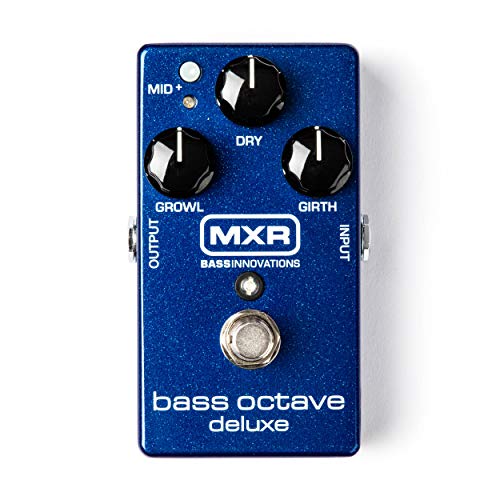 MXR M288 Bass Octave Deluxe Pedal |
8.9/10 | $179.99 | Buy |
| Best Premium |
MXR M81 Bass Preamp
|
8.9/10 | $189.99 | Buy |
| Top Rated |
MXR M87 Bass Compressor
|
8.9/10 | $209.99 | Buy |
| Best Budget |
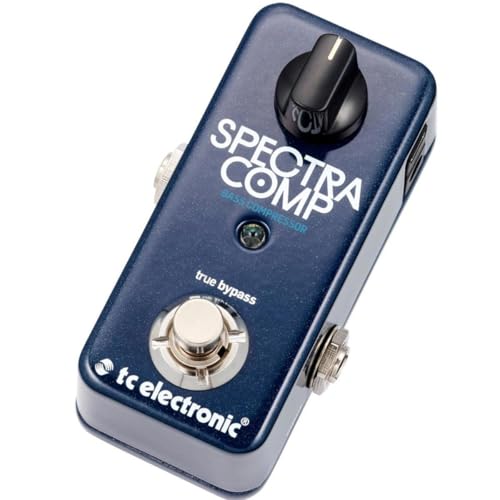 TC Electronic SpectraComp Bass Compressor Pedal |
8.8/10 | $95.90 | Buy |
| Best Value |
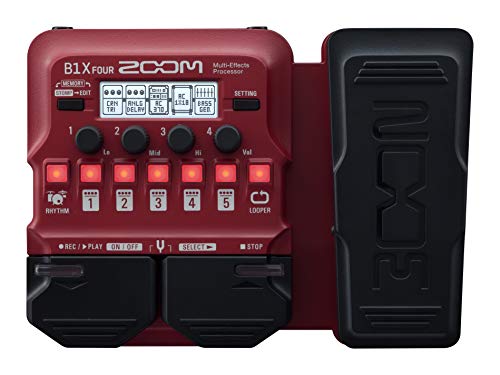 Zoom B1X Four Bass Multi-Effects, Expression Pedal |
8.6/10 | $119.99 | Buy |
| Also Great |
 Electro-Harmonix Bass Big Muff Pi Fuzz Pedal |
8.4/10 | $98.00 | Buy |
| Also Great |
 BOSS GEB-7 Seven-Band Bass EQ Pedal |
8.4/10 | $129.99 | Buy |
| Also Great |
JOYO Double Thruster R-28 Bass Overdrive Pedal
|
8.0/10 | $59.99 | Buy |
| Also Great |
 MXR Bass Envelope Filter with 4 Controls |
8.0/10 | $179.99 | Buy |
MXR M288 Bass Octave Deluxe Pedal
This analog octave pedal delivers two independent octave voices for bassists seeking to fatten their tone. Its Constant Headroom Technology aims for superior tracking, while the Mid+ switch provides a customizable midrange boost.
Pros
- Analog circuitry for a warm, organic tone
- Two separate octave voices for flexible sound shaping
- Mid+ switch allows for user-selected midrange frequency boost
- True bypass preserves signal integrity
- Constant Headroom Technology designed for improved tracking
MXR M81 Bass Preamp
This compact bass preamp focuses on separate input and output level controls plus a sweepable midrange. It suits players who want a direct out for recording or stage use and prefer detailed EQ adjustment. Based on the listed features, it is a focused tone shaping unit rather than a multiple effects solution.
Pros
- Separate input and output level controls
- 3-band EQ with sweepable midrange
- Studio-quality direct out
Cons
- Multiple level controls may require more adjustment than a simpler preamp
- Sweepable midrange can complicate quick EQ changes
MXR M87 Bass Compressor
Designed for bassists seeking transparent compression, the M87 offers clear signal preservation with its CHT Constant Headroom Technology. True bypass and a set of ten gain-reduction LEDs make it both reliable and easy to monitor.
Pros
- Transparent compression preserves full dynamic range.
- CHT Constant Headroom Technology for clean performance.
- True bypass for maintaining signal integrity.
- Highly visible gain-reduction status LEDs for clear monitoring.
- Compact and lightweight design.
TC Electronic SpectraComp Bass Compressor Pedal
This compact pedal delivers studio-quality multiband compression specifically designed for bass guitars. Its standout feature is TonePrint technology, allowing access to a vast library of signature and user-customizable effects.
Pros
- Studio-quality multiband compression optimized for bass
- TonePrint technology for a wide range of signature and customizable effects
- Ultra-compact and portable design
- True bypass for clean signal path when disengaged
Cons
- Lacks detailed user reviews for performance verification
- No specifications provided regarding power requirements
Zoom B1X Four Bass Multi-Effects, Expression Pedal
For bassists who want one floorboard, the Zoom B1X Four combines 70-plus effects, nine amp models, a looper, and an expression pedal. Up to five effects can be chained in any order, while built-in rhythm patterns and a chromatic tuner support practice and live tone shaping.
Pros
- 70-plus effects and nine bass amp models cover a wide range of bass sounds.
- Expression pedal allows real-time control of volume, wah, delay, pitch, and other effects.
- Built-in looper and 68 rhythm patterns support practice, timing, and layered bass parts.
- Up to five simultaneous effects can be arranged in any order for flexible signal routing.
- Chromatic tuner and battery power add convenience for stage, rehearsal, or casual use.
Cons
- Five simultaneous effects may restrict more elaborate signal chains.
- The red color option may not suit every pedalboard or stage setup.
- Battery-powered operation requires ongoing battery management.
Electro-Harmonix Bass Big Muff Pi Fuzz Pedal
This bass fuzz pedal adapts the classic Big Muff drive for bass guitars, with a dry switch and bass boost EQ switch to help preserve low frequencies. It suits players who want sustain, tone, and volume controls in an Electro-Harmonix design. The included 9V battery makes it ready for basic use.
Pros
- Dry switch blends clean bass signal with distortion.
- Bass boost EQ switch reintroduces low frequencies when tone is set for high frequencies.
- Sustain, tone, and volume controls shape drive and distortion.
- Design is based on the Russian Big Muff.
- 9V battery is included.
Cons
- Dry mix is a switch, not a variable blend.
- Bass boost is a switch, not a variable control.
BOSS GEB-7 Seven-Band Bass EQ Pedal
A seven-band graphic equalizer pedal for bass, BOSS GEB-7 offers full-range response for five- and six-string instruments. The level control can boost or cut signal, and the design suits electric-acoustic bass applications. Its compact, light chassis is easy to place in a setup.
Pros
- Seven-band graphic EQ for bass
- Full-range response supports five- and six-string basses
- Level control can boost or cut signal
- Suitable for electric-acoustic bass applications
- Compact and light at about 0.7 pounds
Cons
- Only seven bands are adjustable for frequency shaping
JOYO Double Thruster R-28 Bass Overdrive Pedal
This bass overdrive pedal is built around a dedicated blend control, allowing players to mix clean and distorted signals to preserve low-end clarity while adding grit. Its dual boost switches offer quick tonal shifts for cutting through a mix or adding saturation. The compact, road-ready design suits bassists looking for a versatile and affordable drive option.
Pros
- Blend control preserves low-end punch while adding overdrive
- Dual mid and gain boost switches for tonal flexibility
- Compact, rugged metal chassis with ambient LED lighting
- Offers a range from light overdrive to near-fuzz saturation
Cons
- Requires a 9V DC adapter (center negative, not included)
- Does not support battery operation
MXR Bass Envelope Filter with 4 Controls
This MXR pedal focuses on bass tone shaping, with dry, FX, decay, and Q controls plus an LED bypass footswitch. The compact size suits bassists who want detailed envelope effects without taking much pedalboard space.
Pros
- Four controls allow blending dry signal, effect level, decay, and Q.
- LED bypass footswitch shows when the effect is active.
- Compact 6 x 4.5 x 2.5 inch enclosure is pedalboard friendly.
- 0.36 kg weight makes it easy to transport.
Cons
- Purple finish may not match all pedalboard aesthetics.
- Four controls add setup complexity for players wanting a simple single knob effect.
How We Picked
Our selection process for these bass pedals was based on a thorough analysis of product specifications, manufacturer data, and aggregated user feedback trends. We focused on identifying models that deliver on their core promises for bassists. We prioritized objective criteria to ensure our list highlights pedals known for reliability and performance within their specific effect categories.
- Tonal Integrity: How well the pedal preserves the natural low-end frequencies of the bass guitar.
- Feature Set & Control: The usefulness and intuitiveness of knobs, switches, and additional functions.
- Build Quality & Durability: Reliability for both studio use and live performance conditions.
- Versatility: Ability to cover a range of sounds or playing styles within its effect type.
- Value Proposition: The balance of performance, features, and cost.
Buying Guide: Making Sense of Best Bass Guitar Pedals
Identify Your Primary Effect Need
Start by pinpointing the gap in your sound. Are you looking to even out your dynamics with a compressor, add grit with an overdrive or fuzz, sculpt your EQ, or explore modulation like octave or envelope filter effects? A multi-effects unit like the Zoom B1X Four Bass Multi-Effects with Expression is an excellent way to experiment with many effect types before investing in dedicated pedals. For those focusing on pure tone shaping, our guide on the best electric guitars discusses similar foundational tone principles.
Prioritize Low-End Preservation
This is the most critical factor distinguishing bass pedals from guitar pedals. Look for features designed to maintain your fundamental low notes. A “Blend” or “Dry” control, as found on many modern bass drives and compressors, is invaluable. It allows you to mix your clean, unaffected bass signal with the processed sound, ensuring your bottom end never disappears.
The Electro-Harmonix Bass Big Muff Pi Fuzz Pedal, for example, includes a dedicated “Dry” switch and a “Bass Boost” EQ switch specifically to reintroduce low frequencies, making it a classic choice for heavy distortion without sacrificing weight.
Consider Your Signal Chain & Power
Think about your current setup and future expansion. Does the pedal offer true bypass or buffered bypass? True bypass is great for preserving your core tone when the pedal is off, while a high-quality buffer can prevent high-end loss in long cable runs. Also, check the power requirements. Most pedals use a standard 9V DC center-negative supply, but some digital or feature-rich models may require more current (mA). Using an isolated power supply is the best practice to avoid noise.
Quick Checklist
- Have I defined the specific effect type I need most?
- Does this pedal have a feature (Blend, Dry, specific EQ) to protect my low-end?
- Is the bypass type (true/buffered) suitable for my existing pedalboard?
- Do I have the correct power supply (voltage, current, polarity)?
- Is the physical size and footswitch placement practical for my board layout?
Related reading: Discover how other audio components can enhance your experience in our roundup of the best home theater receivers.
FAQs
What is the best bass guitar pedals in 2026?
The “best” pedal depends entirely on your goal. For most players seeking professional, transparent compression, the MXR Bass Compressor is a top contender. Our shortlist provides options for different primary needs and budgets.
Can I use guitar pedals for bass?
You can, but with caution. Many guitar pedals will cut low frequencies, making your bass sound thin. Bass-specific pedals are engineered to handle lower frequencies. If using a guitar pedal, look for one with a blend control or pair it with a bass EQ pedal to restore lows. Learn more about signal processing in our Audio section.
What’s the first pedal a bassist should buy?
A tuner is essential, often followed by a compressor or a preamp/DI box. A compressor evens out your playing dynamics, while a preamp like the MXR Bass Preamp can shape your tone and provide a direct output for recording or PA systems.
How do I power multiple pedals?
The cleanest solution is a dedicated, multi-output, isolated power supply unit (PSU). Avoid daisy-chaining pedals with a single adapter if possible, as this can introduce hum, especially with digital or high-current-draw pedals.
What does “true bypass” mean?
True bypass means when the pedal is turned off, your signal passes through a simple mechanical switch without any electronic circuitry, theoretically preserving your original tone. It’s a desirable feature for maintaining signal integrity in large pedalboards.
Are multi-effects pedals good for beginners?
Yes, they are excellent. They offer a cost-effective way to experiment with dozens of effects, amp models, and often include a tuner and looper. This helps you discover which effects you use most before buying individual pedals. For other beginner-friendly gear ideas, see our list of the best acoustic guitars for beginners.
Final Thoughts
Our shortlist highlights three pedals tailored for distinct purposes. The MXR Bass Compressor is the go-to for players who demand studio-grade dynamic control without coloration. The MXR Bass Preamp suits bassists needing versatile onboard EQ and a reliable direct output for gigs or recording. The JOYO Bass Overdrive Guitar Pedal offers an accessible entry into overdriven tones, with its blend control ensuring your foundational sound remains intact. For more detailed comparisons on specific gear, check out our review of the best PRS guitars. Once your new pedal arrives, take time to dial in the settings at practice volume, experiment with its placement in your signal chain, and always use a proper power supply to ensure it performs at its best.
About the author
Managing Editor & Buying Guides. Sam oversees the editorial calendar and edits every buying guide. Sam makes sure each guide states its ranking criteria up front, shows pros and cons side by side, and says who a product is not for.